
Continuous Runtime Protection
Understand important behavioral changes while systems are running, with local context retained around the event.
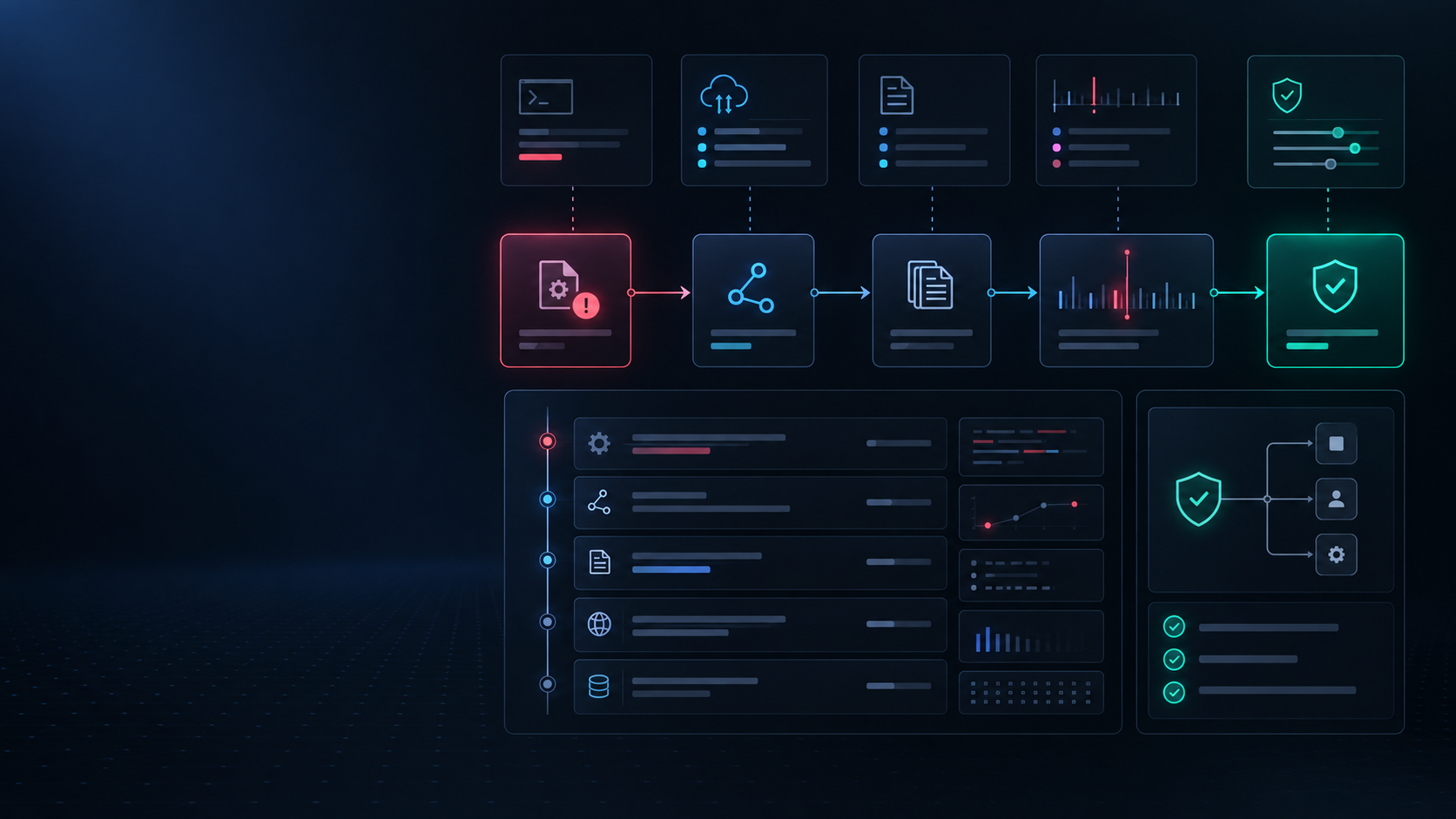
Connect process behavior, resource use, network activity, temporal evidence and controlled response.
V9SEC / EVIDENCE-LED SECURITY
V9SEC / EVIDENCE-LED SECURITY
V9SEC connects process, resource, network and temporal evidence into one reviewable security story.
CUSTOMER SCENARIO
A user reports that a machine is slow, unstable or behaving unexpectedly. AIOTOR helps the team review what changed, understand the surrounding context and open the supporting evidence.
ENTERPRISE SYSTEM PROTECTION
AIOTOR is designed to help security and operations teams understand important runtime change through a clear, evidence-led investigation experience.
Understand important behavioral changes while systems are running, with local context retained around the event.
Prioritize meaningful changes while connecting process, resource and network context for analysts and operators.
Present related evidence in a coherent investigation so teams spend less time switching between disconnected screens.
Review the relevant history around an event to accelerate investigation and root-cause analysis.
Keep conclusions inspectable, with supporting and contradictory evidence visible to the analyst.
Support containment and remediation through explicit policy, operator authority and reviewable outcomes.
FROM WARNING TO UNDERSTANDING
AIOTOR is designed to make security decisions easier to review, communicate and defend.
INDIVIDUAL + FLEET INTELLIGENCE
The same product family can answer a local user's question and then help an authorized enterprise team determine whether the behavior is isolated or systemic.
Clear language, the reason for concern, what has and has not been observed, and a safe next step.
Review related systems, compare findings and open the supporting evidence.
EXTEND PROTECTION TO THE USER
AIOTOR Mobile Security can help users recognize risky links and suspicious destinations, while V9SEC can provide deeper context when activity reaches the endpoint.
PAID ENTERPRISE PILOT
Start with a controlled scope and measure detection quality, investigation time, false-positive behavior, evidence completeness, runtime overhead and response safety.
ENGAGE AIOTOR
Security, SRE and platform teams can scope a focused evaluation around system visibility, causal investigation, application reliability or security operations.